


Kenyan President William Ruto delivered a powerful challenge to Africa, declaring that the continent’s next great battle must be to transform political freedom into economic freedom.
Speaking at President Hakainde Hichilema’s inauguration in Lusaka on Tuesday, Ruto said Africa had achieved the political liberation fought for by previous generations but now faced the responsibility of turning that freedom into jobs, industries, wealth and prosperity for its people.
“Our task is to turn political freedom into economic freedom, natural wealth into African prosperity, sovereignty into self-reliance, and democracy into opportunity.”
Ruto said Africa’s challenge was not a lack of resources but the failure to fully convert its vast natural wealth, markets and human capital into economic opportunities.
“The challenge before us, therefore, is not absence of resources; it is how we use these resources to create opportunity and to create wealth.”
He contrasted the mission of Africa’s independence generation with the responsibility facing today’s leaders.
“Their mission was liberation. Ours must be transformation.”
AFRICA CANNOT INDUSTRIALISE THROUGH POLITICAL UNCERTAINTY
Ruto warned that political instability remains one of the biggest obstacles to Africa’s economic transformation, arguing that businesses and investors require predictable environments to commit capital and create jobs.
“Africa cannot industrialize if every election becomes a movement of national uncertainty.”
“Business cannot build where tomorrow is uncertain.”
“Capital will not flow where institutions cannot be trusted.”
He said strong democratic institutions, political stability and respect for the rule of law are not merely political ideals but essential foundations for economic prosperity.
“They are foundations of prosperity for all of us who seek political leadership in Africa.”
DEMOCRACY MUST SURVIVE DISAGREEMENT
Ruto also delivered a strong message on political competition, urging African leaders to ensure elections do not become sources of division and conflict.
“Democracy is not tested when we agree. Democracy is tested when we disagree.”
He said elections should determine who governs, but should never determine who belongs to a country.
“Elections are designed to settle who governs. They should never determine who belongs.”
Ruto said citizens who support different political parties remain equally important to their countries.
“They all belong equally to Zambia, and they must all have a place in the future.”
He warned against allowing political competition to destroy national unity.
“Political competition may divide choices; it must never divide our destiny.”
“Our politics must never become more important than our countries.”
RUTO PRAISES HICHILEMA'S LEADERSHIP
Ruto praised Hichilema’s leadership during what he described as difficult economic circumstances, particularly his efforts to stabilise Zambia’s economy.
He said Hichilema’s second term should now focus on turning that stability into tangible prosperity for citizens.
“Your choices, my brother, in those difficult moments, demonstrated leadership and statesmanship, not populism.”
“The challenge, Mr President, of the second term is to build on these gains and translate economic stability into prosperity for your citizens.”
Ruto said the real test of Zambia’s economic progress would be whether stability eventually translates into jobs, incomes, businesses and improved livelihoods.
KENYA-ZAMBIA TIES MUST CREATE WEALTH
The Kenyan President also called for stronger economic relations between Kenya and Zambia, saying the relationship between the two countries should move beyond political friendship and produce tangible economic benefits.
“Our friendship must increasingly be measured not simply by its warmth, but by the prosperity it creates.”
Ruto called for greater trade, investment and cooperation between the two countries, particularly as Africa seeks to build stronger regional markets.
He said stronger economic integration would allow African countries to create larger markets for their products while reducing dependence on external markets.
Ruto delivered one of the strongest parts of his speech when he challenged African countries to stop exporting raw materials and importing finished products at higher prices.
“For too long we have exported African minerals, African agricultural produce, and African raw materials only to import their value back at a premium.”
He said Africa must move towards industrialisation, manufacturing and value addition.
“Africa must industrialize. Africa must manufacture. Africa must add value to what it produces.”
Ruto also called for stronger intra-African trade.
“Africa must trade with Africa.”
He said this would not mean isolating the continent from the global economy, but rather building the capacity to participate in global markets from a position of strength.
“This is not a retreat from the world. It is how Africa prepares to engage the world from a position of strength.”
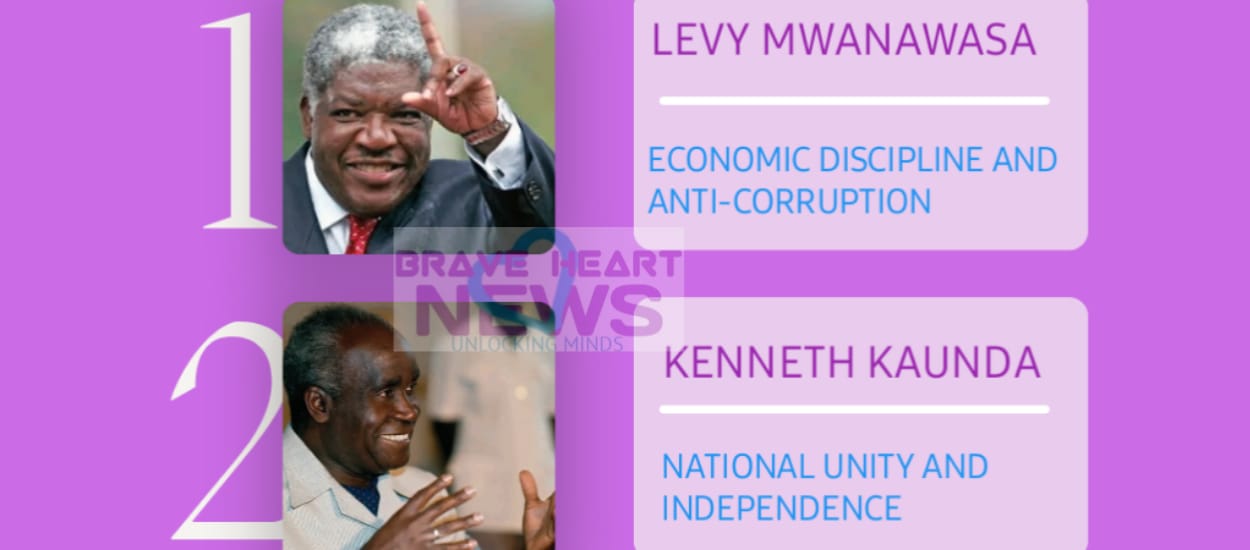
Ruto invoked the legacy of Zambia’s founding President Kenneth Kaunda and other African liberation leaders who fought against colonialism and apartheid.
He said their generation had secured political freedom, leaving the current generation with a different responsibility.
“They fought so that Africa must govern itself. We must still build an Africa capable of feeding itself, powering itself, trading with itself, adding value for its own resources, and creating prosperity for its own people.”
Ruto said Africa must now harness its resources and political freedom towards a common economic purpose.
“Our task is to harness that power to purpose.”
He argued that political independence would remain incomplete if African countries could not create sufficient economic opportunities for their own people.
“There is secure political freedom. We must secure economic freedom.”
JUST TO UNLOCK YOUR MIND
Ruto’s speech ultimately went beyond Zambia and Kenya, presenting economic transformation as the next chapter of Africa’s liberation story.
“They gave us freedom. Our duty is to turn that freedom into prosperity.”
The Kenyan President’s intervention placed industrialisation, value addition, intra-African trade, political stability and democratic maturity at the centre of Africa’s next development phase.
Political freedom created the foundation, but economic freedom must now deliver the results.
And as Zambia begins President Hichilema’s second term, Ruto’s challenge is one that will resonate far beyond the inauguration stadium.
“One Zambia, one nation, one Africa, one destiny.”
[Brave Heart News | UnlockingMinds]



Comments
No comments yet. Be the first to comment!
Leave a Comment